Every week someone asks us, “How much will my app cost?” The honest answer is it depends, but it depends on a small number of things you can understand and control. This guide explains them so you can plan a realistic budget before you talk to any development company.
The five things that decide the price
1. Scope: how many screens and workflows
Cost follows the number of distinct things a user can do. A marketing website with ten pages is a different project from a booking platform where customers pay, staff manage calendars and admins see reports. Write down every role (customer, staff, admin) and every job each role needs to finish. That list is the single best predictor of effort.
2. Platforms
A responsive web app runs everywhere with one codebase. Native iOS and Android apps add app-store work, device testing and release management. Cross-platform frameworks such as Flutter or React Native let one team ship to both stores, which usually saves 30–40% compared with two separate native apps.
3. Integrations
Payments, SMS, email, maps, accounting software, ERPs and government APIs each bring their own setup, testing and failure cases. Count them early, they are where estimates most often slip.
4. Security and compliance
Handling health records, payments or personal data means encryption, audit logs, access controls and sometimes formal reviews. Done from day one this is affordable; bolted on later it is expensive.
5. Who maintains it after launch
Software is never “done”. Hosting, monitoring, security updates and small improvements are an ongoing cost. Ask every vendor what support looks like in month thirteen, not just at launch.
Typical ranges
These are broad ranges for projects built by an experienced team in India for clients anywhere in the world:
| Project | Typical timeline | What’s usually included |
|---|---|---|
| Business website with CMS | 2–4 weeks | Design, content pages, blog, contact forms, SEO setup |
| E-commerce store | 4–8 weeks | Catalogue, cart, payments, orders, admin |
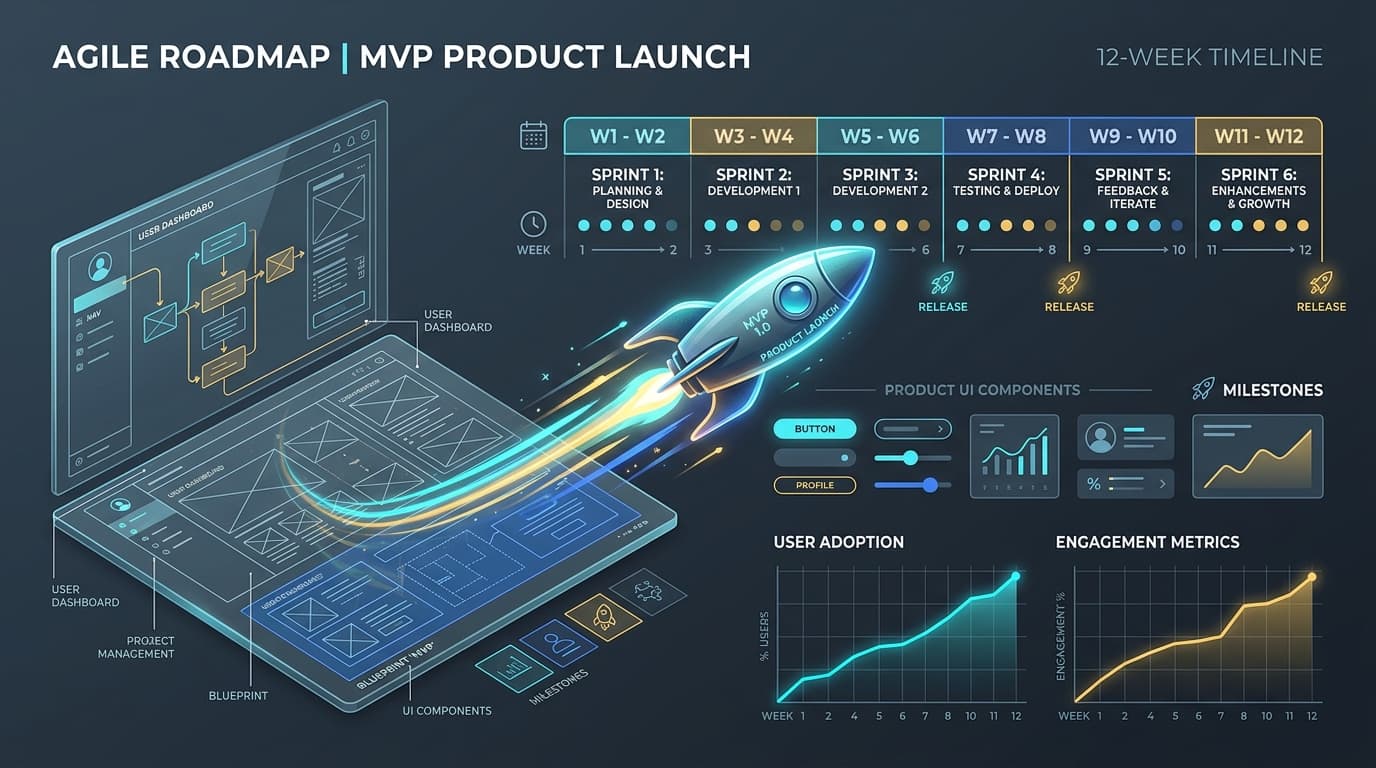
| MVP web or mobile app | 8–14 weeks | Core workflows, auth, admin panel, analytics |
| Business system / SaaS | 3–6 months | Multiple roles, integrations, reporting, security hardening |
Your project may sit outside these ranges. The point is to see that time, not hourly rate alone, drives cost.
How to get an accurate quote
- Describe outcomes, not features. “Customers should book and pay for a slot in under a minute” is more useful than “we need a calendar”.
- Mark what’s essential for launch. Everything else goes into phase two. A smaller first release reaches users sooner and teaches you what to build next.
- Share examples. Apps you like (and dislike) save hours of back-and-forth.
- Ask for a fixed-scope discovery. A short paid or free discovery phase produces a clickable prototype and a firm estimate, which protects both sides.
Red flags when comparing quotes
- A price with no breakdown of screens, integrations or testing.
- No mention of who owns the source code (you should).
- No plan for hosting, backups or security updates.
- Promises of “unlimited revisions”, they usually mean unclear scope.
Next step
If you’d like a realistic estimate, tell us about your project. We reply within one business day with questions, a suggested scope for a first release and an indicative budget, no obligation.